How to Read Sheet Music for Beginners: Notes, Clefs and Rhythm
August 28, 2026
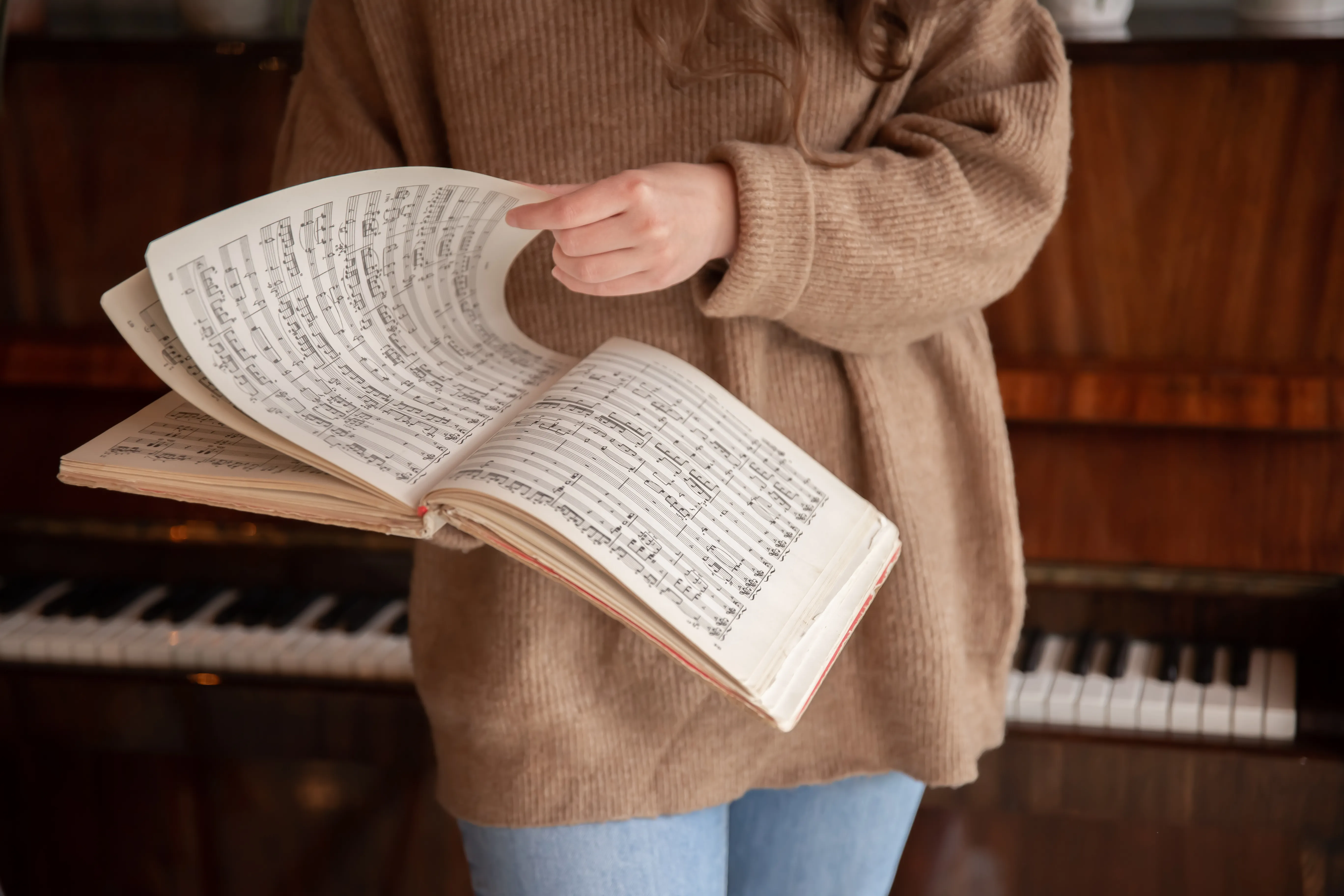
Sheet music can look crowded when every line, symbol and note seems to ask for attention at once. A beginner does not need to understand the entire page before playing the first measure.
To learn how to read sheet music, start with a few dependable clues: the staff, the clef, the position of each note and its duration. Read those layers separately before trying to play them together. This turns a page of music notation and symbols into a short routine that can be repeated one measure at a time.
If you are helping a child, keep the questions small. “Which clef do you see?” is easier to answer than “What does everything mean?” C&K's guide to music theory for beginners explains how these skills fit into the larger learning picture. Here, the goal is more immediate: making one careful first pass across the page.
What Should You Read First?
Begin with the large clues before moving to individual notes:
- Find the five-line staff.
- Identify the clef at the beginning.
- Notice whether each note sits on a line or in a space.
- Look at the note value to see its relative duration.
- Check the time signature for the basic pulse and measure grouping.The clef and note position identify the note name and register. The note value shows how long that sound lasts in relation to the notes around it. Key signatures, accidentals, and other markings add another layer, but they do not need to be solved during this first pass.
How Does the Staff Organize Notes?
The staff gives written notes a vertical home. It has five lines with four spaces between them. A note can sit on a line or in a space. Once the clef establishes a reference pitch, every next line or space upward moves to the next letter name. Moving downward reverses the order.
Notes on Lines and Spaces
Written music uses seven letter names: A, B, C, D, E, F, and G. After G, the sequence repeats at A. This allows a beginner to read lines and spaces as one continuous ladder instead of memorizing them as two unrelated sets.
Start from one note you know. Move to the next line or space and advance one letter. If your known note is G, the next position up is A, then B, then C. The same method works downward by reversing the alphabet.
Mnemonics can be helpful reminders, but they should not be the only way a student finds a note. Following the continuous line-space sequence makes it easier to recover when a memorized phrase slips away. The clef still matters because it tells the reader where that sequence begins.

Which Clef Are You Reading?
A clef is the map key for the staff. It assigns a known pitch to a particular line, which lets you name the other notes from that reference. Identify it before you begin naming anything.
Treble and Bass Clefs
To understand the difference between treble and bass clefs, start by finding the line each symbol marks. Treble clef is also called the G clef because its curl centres on the second line from the bottom, marking that line as G. Bass clef is also called the F clef because its two dots sit around the second line from the top, marking that line as F.
From there, move outward one line or space at a time. When reading treble clef notes, begin from the G anchor. When you see the bass clef symbol, begin from the F anchor. At first, a student may count from these reference notes. With practice, frequently used notes begin to be recognized directly.
Alto Clef for Viola
Viola students need one more map key. Viola music primarily uses alto clef, and the centre of the clef sits on the staff's middle line to mark middle C. To begin reading alto clef notes, start from that middle C and move through the same repeating musical alphabet. That is enough orientation for a first pass. Direct recognition develops gradually as the student sees the same positions again and again.
How Do Note Values Create Rhythm?
Note values show relative duration. The shape changes as a value is divided into smaller parts, so you can compare long and short sounds before trying to perform the pattern. Pitch answers “which note?” Rhythm answers “when, and for how long?”
Whole, Half, Quarter and Eighth Notes
The core pattern is a set of halves: one whole note lasts as long as two half notes, four quarter notes, or eight eighth notes. A half note is half of a whole note, a quarter note is half of a half note, and an eighth note is half of a quarter note. These are proportions, not fixed numbers of seconds. Tempo changes how quickly the pattern moves.
As Open Music Theory's note-value guide explains, the North American term eighth note is called a quaver in British terminology. A student may encounter either name depending on the book or teacher.
A useful practice is to clap one whole-note span, split the same span into two equal halves, then four quarters, then eight equal eighths. You're listening for equal division, not racing through a count.

What a Time Signature Shows
A time signature in music helps you orient the recurring pulse. In simple meter, the upper number shows how many beats belong in each measure. The lower number shows which note value serves as the beat unit. It organizes the pulse but doesn't set the tempo.
Take 3/4 as a simple example. The 3 means each measure contains three beats, and the 4 means the quarter note is the beat unit. For a first reading, it is enough to see each measure as one group of three quarter-note pulses. Open Music Theory's simple-meter guide provides a fuller explanation of the two numbers.
Put the Layers Together With One Short Measure
Bring pitch and rhythm together only after reading each layer on its own. Use this routine on one short line or measure:
- Find the clef. Decide whether the line uses treble, bass, or alto clef.
- Choose an anchor note. Locate the clef's reference line, then move outward through A to G.
- Name the notes. Move through every line and space in order. Say the letters aloud or point to them as you go.
- Scan the durations. Look for whole, half, quarter and eighth notes. Use the time signature to understand the pulse and measure grouping.
- Say, clap, then play. Speak the note names without rhythm, clap the durations without pitch, then combine the two on your instrument.
For example, imagine one treble-clef measure in 3/4: a G quarter note followed by four ascending eighth notes, A, B, C and D. First name the five pitches. Next clap one quarter-note beat followed by four evenly spaced eighth notes. Then play the measure slowly. If you lose your place, return to the clef and anchor note instead of guessing.
Keep the exercise short enough to repeat accurately. One carefully read measure is more useful than a full page of uncertain decoding. When the routine feels steady, move to the next measure and use the same order again.
How Can a Parent Tell Whether a Child Is Reading or Remembering?
A child may play a familiar piece smoothly and still hesitate when asked to name the notes. That does not automatically mean something is wrong. The hands may have memorized the movement before note recognition has become equally fluent.
To see which part of the process still needs support, try one short and unfamiliar measure. Ask the child to identify the clef, name the notes and clap the rhythm before playing. Keep the tone curious rather than corrective. The goal is not to test the child. It is to notice whether the difficulty lies in finding the notes, holding the rhythm or combining the two.
Reading becomes faster through repeated contact with manageable material. If a child regularly relies on guessing, finger patterns or watching someone else play, bring that observation to the teacher. The teacher can adjust the difficulty, separate the reading steps or choose a shorter exercise that allows the child to work accurately.
What Comes After This First Pass?
Once the basic routine feels familiar, beginners can gradually add rests, accidentals, key signatures, dynamics and articulation. These markings tell the reader when to stay silent, when a pitch changes and how the music should be shaped.
They do not need to be learned all at once. The same approach still works: identify one new layer, practise it separately and then bring it back into the measure.
Keep Learning Step by Step
Reading sheet music becomes more manageable when each layer is learned separately: clef, note position, note name, duration and pulse. With patient repetition, these steps gradually begin to work together.
At C&K Music Studio, students can continue building these foundations through RCM Music Theory Courses or apply them directly in piano, violin, viola, and cello lessons. The right next step depends on whether the learner needs help understanding the page or using those reading skills on an instrument.